Visual Bukkit has standard blocks for common collections like lists, hashmaps, and hashsets. These are clearly explained below!
List
A list is an ordered collection of elements. This means you can use the index to retrieve a specific element from the list. Unlike sets, a list can contain duplicates.
In Visual Bukkit, you can create a list using the “List” block. There, you can create and add items that define the list.
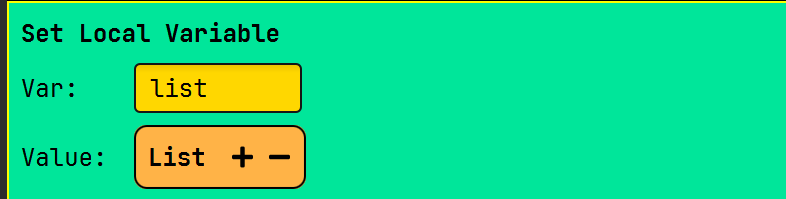
Common methods on a list are:
| Method | Description |
|---|---|
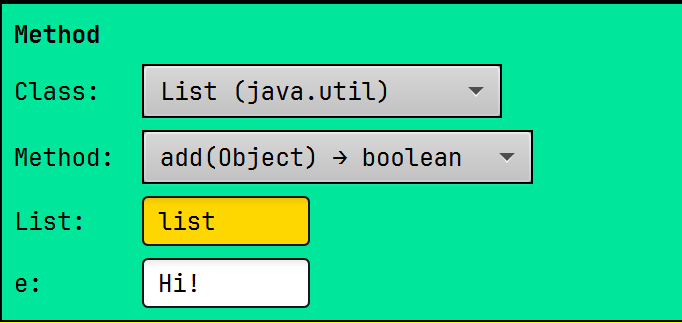
add() | Adds an element to the end of the list |
get() | Returns the element at the specified position |
set() | Replaces the element at the specified position |
remove() | Removes the element at the specified position |
size() | Returns the number of elements in the list |
You can find all the List methods and their explanation here.
In Visual Bukkit these methods could be found in the List class:
Immutable List
Immutable means unchangeable. You cannot add or remove items from an immutable list after it has been created. Because its size cannot change, it can be more efficient than a regular list.
HashMap
A HashMap stores a unique key and value. Each key is unique and is used to retrieve its associated value.
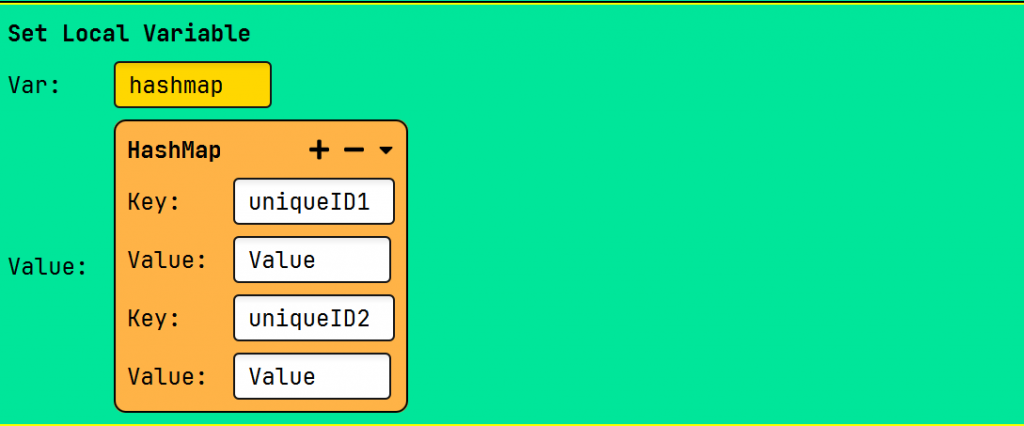
Common methods are:
| Method | Description |
|---|---|
put(key, value) | Adds or replaces a key–value pair |
get(key) | Retrieves the value associated with a key |
remove(key) | Removes a key and its value |
size() | Returns the number of keys in the HashMap |
values(), keySet() | Returns a collection of all values or keys |
HashSet
A HashSet is a collection n which all elements are unique. Unlike a list, a HashSet does not maintain any order and does not use indexes.
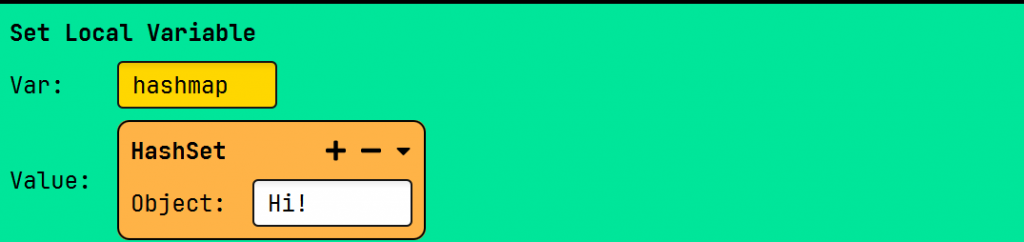
Common methods are:
| Method | Description |
|---|---|
add() | Add an element |
contains(value) | Does a certain element exist? |
remove(value) | Remove a value |
size() | The size of the HashSet |
And other types?
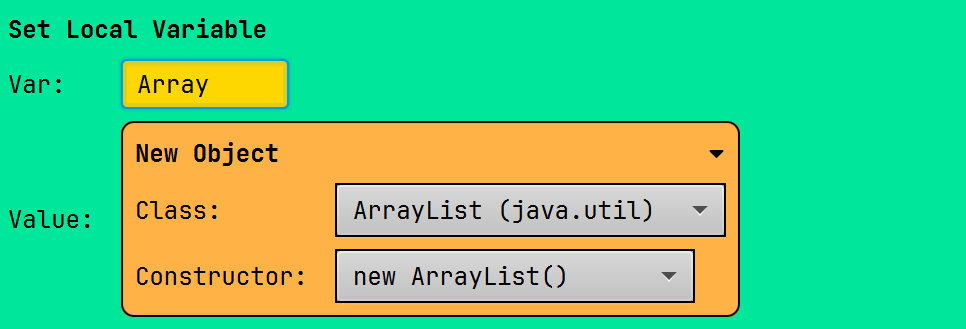
Other collection types are not available by default, though you can easily create them with the new Object block.
Leave a Reply